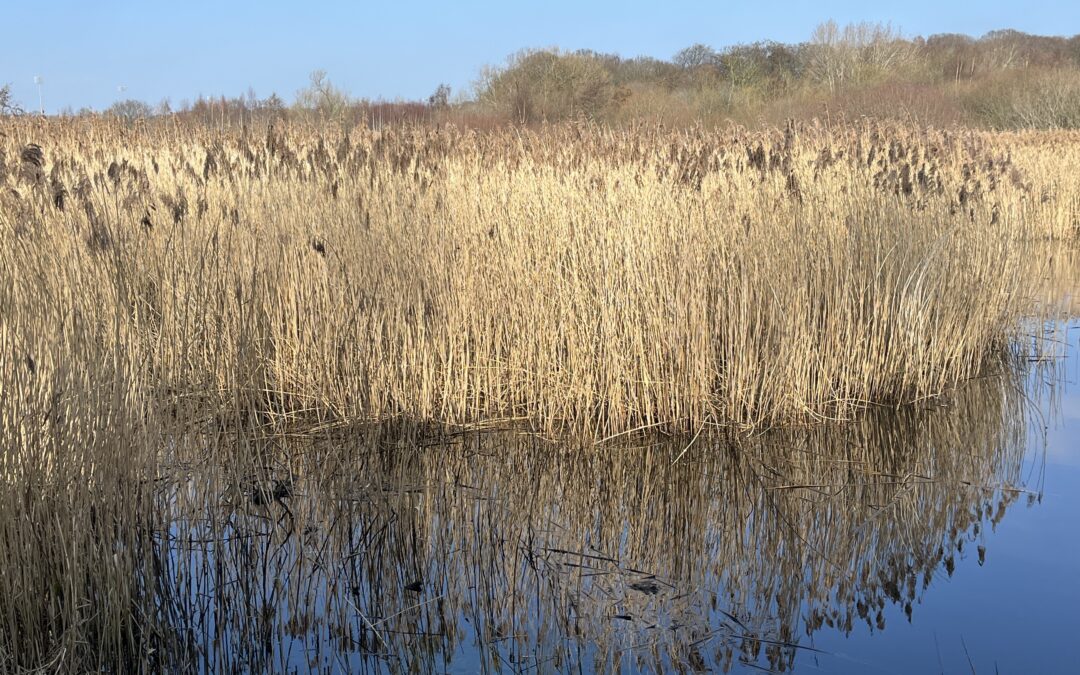
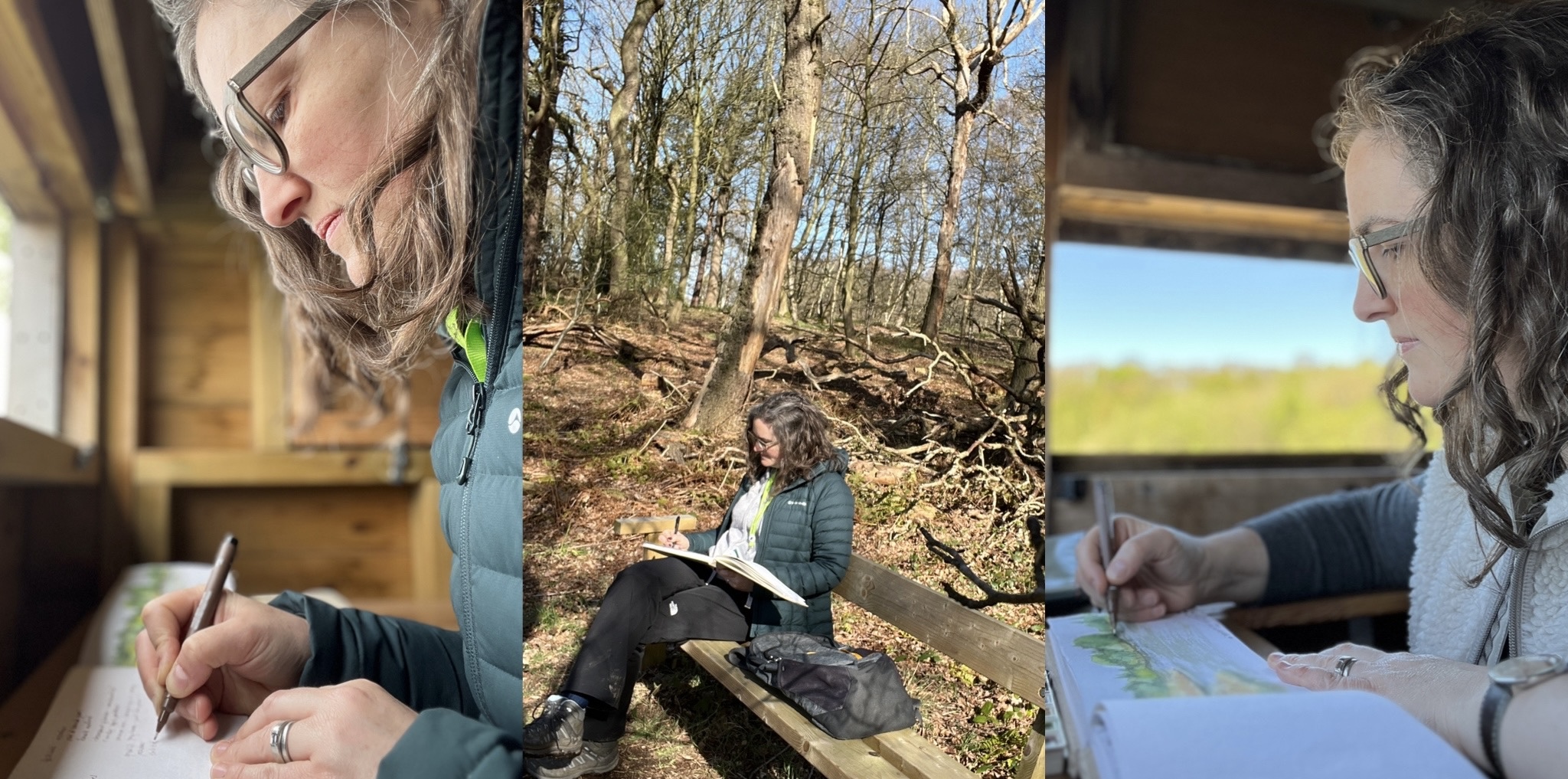
I’ve now been spending time getting to know Gosforth Nature Reserve as their Artist in Residence for around 6 weeks. My time on site is spent walking and observing, listening to birdsong, taking photographs and sketching. Most of the sketching has been done in the bird hides, as it gives me the best views of the reed beds and the ponds, and of course a great view of all the birds going about their business on and around the water.
This time has definitely resulted in me rekindling my love of sketching. For a while it’s been something I mean to do but don’t always find the time to do, but at the reserve time stands still and the hours fly by. A few days ago I was sketching a view of the reed beds whilst being serenaded by a sedge warbler, and it was hypnotic.
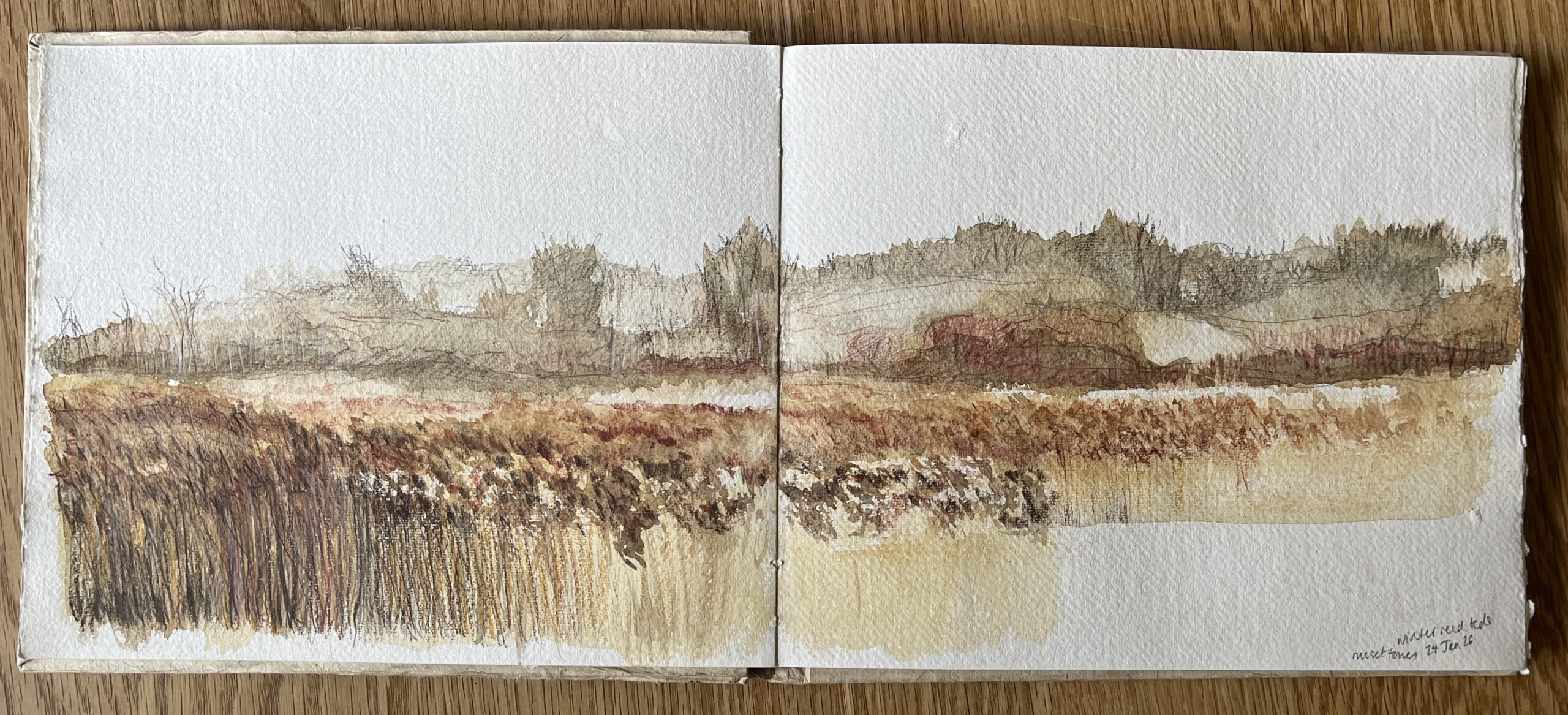
I have tried to be free and instinctive in my approach to these sketches, trying to train my brain to just respond to the landscape as it is, rather than immediately interpreting it as a possible linocut print. Sometimes I use watercolours, sometimes a pen, and I’ve also sketched with broken reeds, dipping them in ink and using their scratchy ends as a stylus. Repeatedly drawing the same view in different light and weather conditions is a great way to really get to know a place, and it’s been an important part of my journey here so far. For that reason, I’d like to exhibit my 2 sketchbooks along with the prints at the end of the residency.
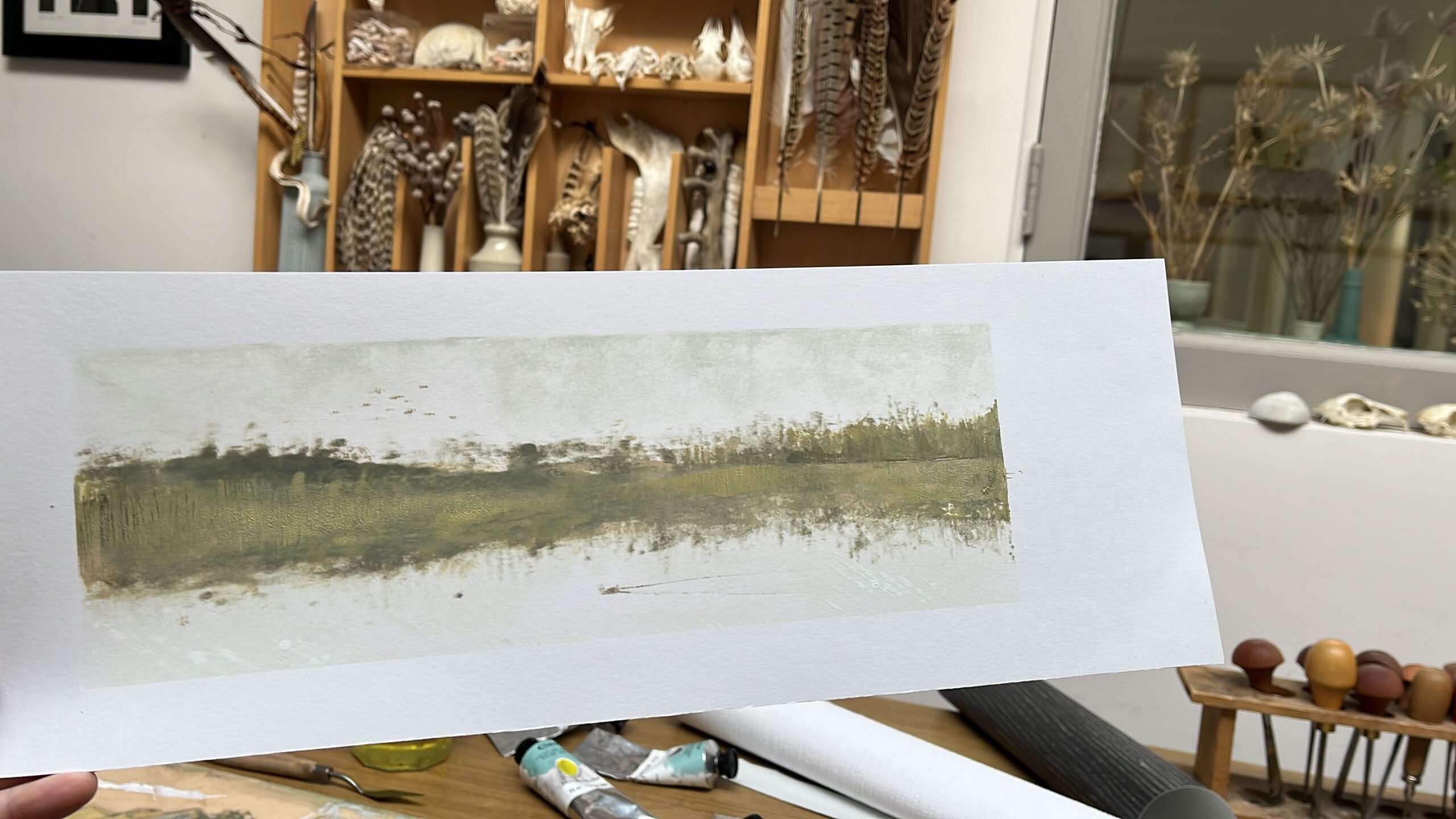
I’ve spent some time being experimental in the studio, translating some of my sketches into monoprints. This isn’t the way I usually work, but I felt it was important to push myself out of my comfort zone and try something new for this project, and I thought that making monoprints may keep prints feeling fresh and give a lighter touch – after all, these landscapes are alive, awake and constantly moving. It’s been a joyful and liberating process, very different from the more controlled way of making a linocut print.
To make the monoprints, I applied ink to a plate using rollers and any other tool I had to hand. I then wiped the ink away, spread it, drew into it, scratched at it – whatever I felt the print needed. I built up as many layers of ink as I felt were necessary, laying the same piece of paper on top each time. Sometimes this worked, sometimes it didn’t. If the resulting print made me feel as though I were in the reserve, then it was successful – but there were definitely failures along the way. These prints aren’t about replicating detail, they’re about conjuring up a feeling or an impression.
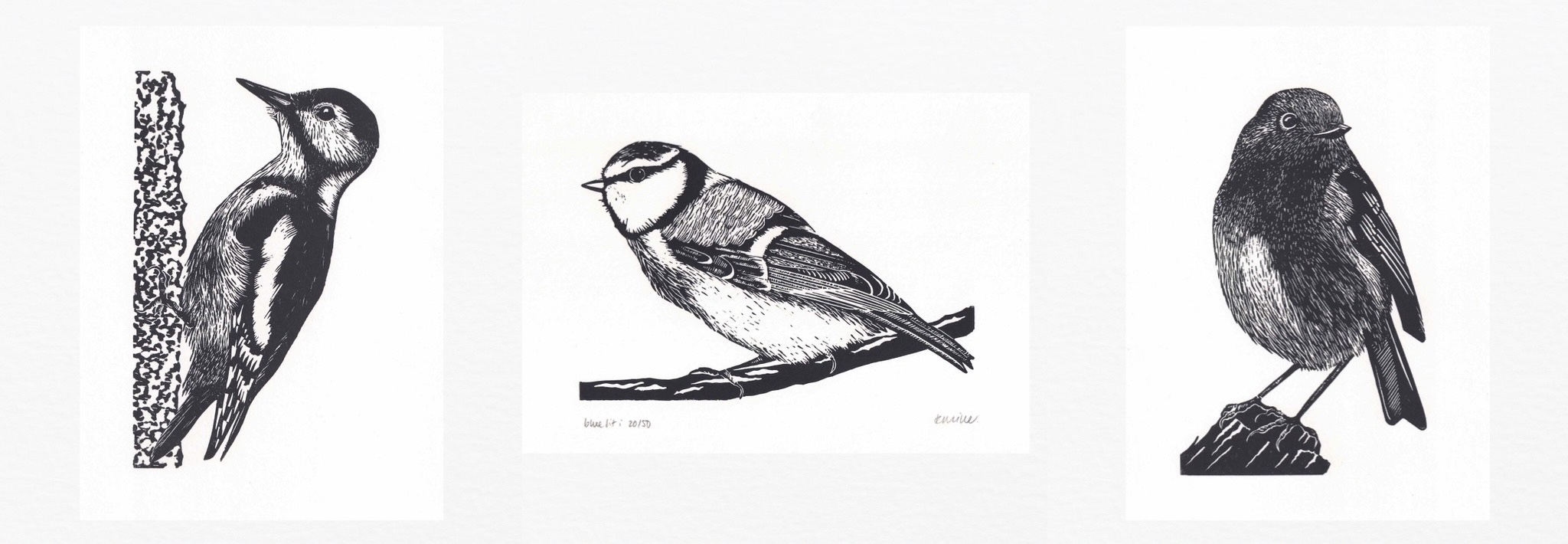
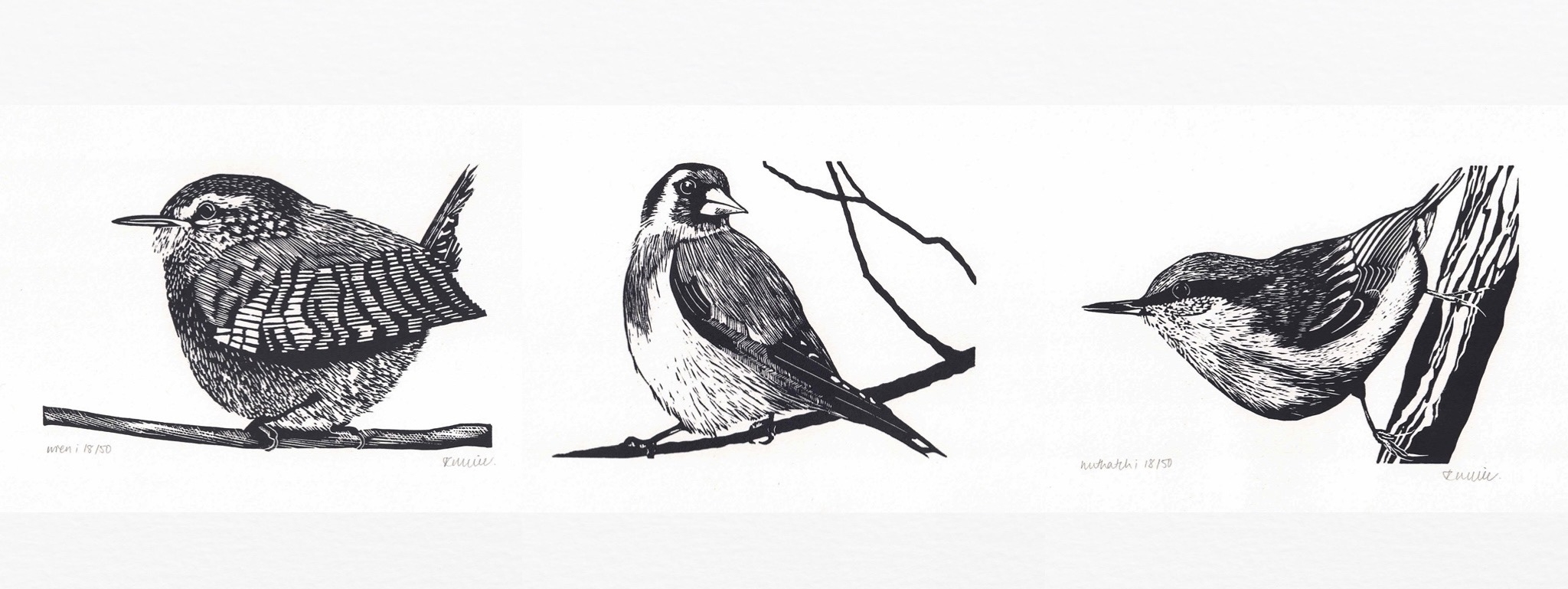
I have learned so much about birds since starting to spend time at the reserve! So alongside working on larger prints, I have been making a series of small, single block linocut prints of some of the birds I’ve been watching. There are so many species in the reserve, and it’s definitely an ongoing collection. So far, I’ve made a wren, a nuthatch, a bittern, a blue tit, a goldfinch, a greater spotted woodpecker and a robin. There will be many more of these little prints to come and I will be exhibiting the originals at the exhibition at the end of June.
But my main intention for this project was always to create some large scale reduction linocut prints in response to the reserve. I’m hoping to make 3 of these prints and have so far finished one. The process takes time and careful planning. A reduction linocut print involves using a single block of lino to create a print with several layers or colours. A block is cut and printed, and then the same block is cut into further and reprinted on top of the original layer, in a different colour. This process is then repeated until the print finally comes together for the last layer, by which time there is usually very little of the block’s surface remaining.
I have recently finished my first reduction print for the exhibition. It took me 6 weeks to make and has 21 colours. It features a grey heron in flight above the reed beds, with a row of bushes and trees in the distance. I have yet to visit the reserve without seeing a heron. They seem to always be flying overhead, and recently there’s usually one taking a nap by the side of the Ridley hide, tucked in the edge of the reeds. I’m looking forward to showing this print at the end of June and sharing it with visitors. I hope it strikes a chord with people, as to me it really sums up the reserve.